.webp)
New business owners often underestimate the importance of cafe and restaurant equipment, believing that a good location and a great menu are enough to guarantee success. But the reality is quite different. Properly equipped premises are the silent foundation upon which everything else rests—from food quality to speed of service to customer satisfaction.
Qimmat Al-Markat Al-Arabiya, a company specializing in importing and distributing food products, witnesses this reality daily in its dealings with dozens of businesses. What they all have in common is that the successful ones built their businesses on meticulous planning, not fleeting enthusiasm.
What are the requirements for cafes and restaurants?
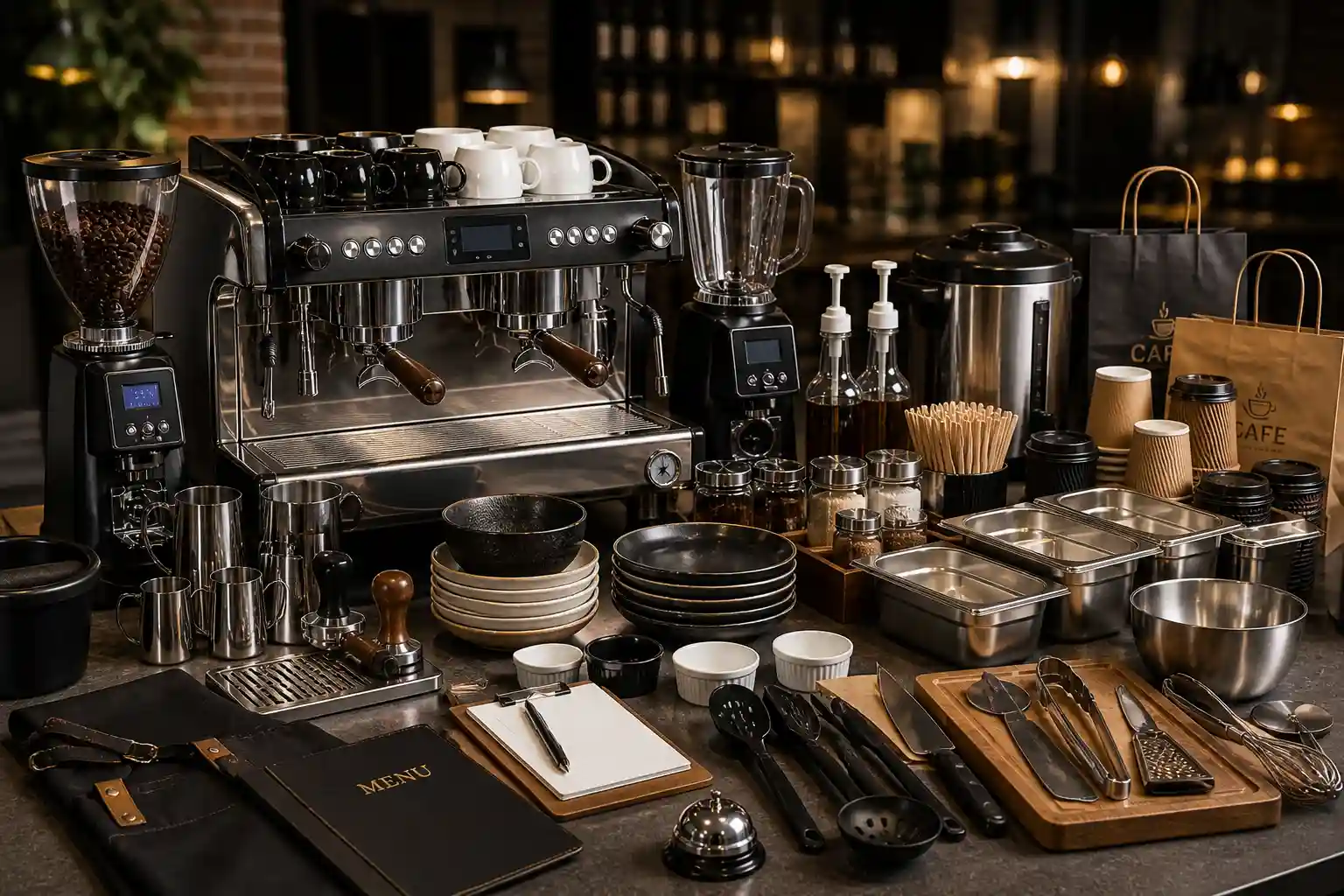
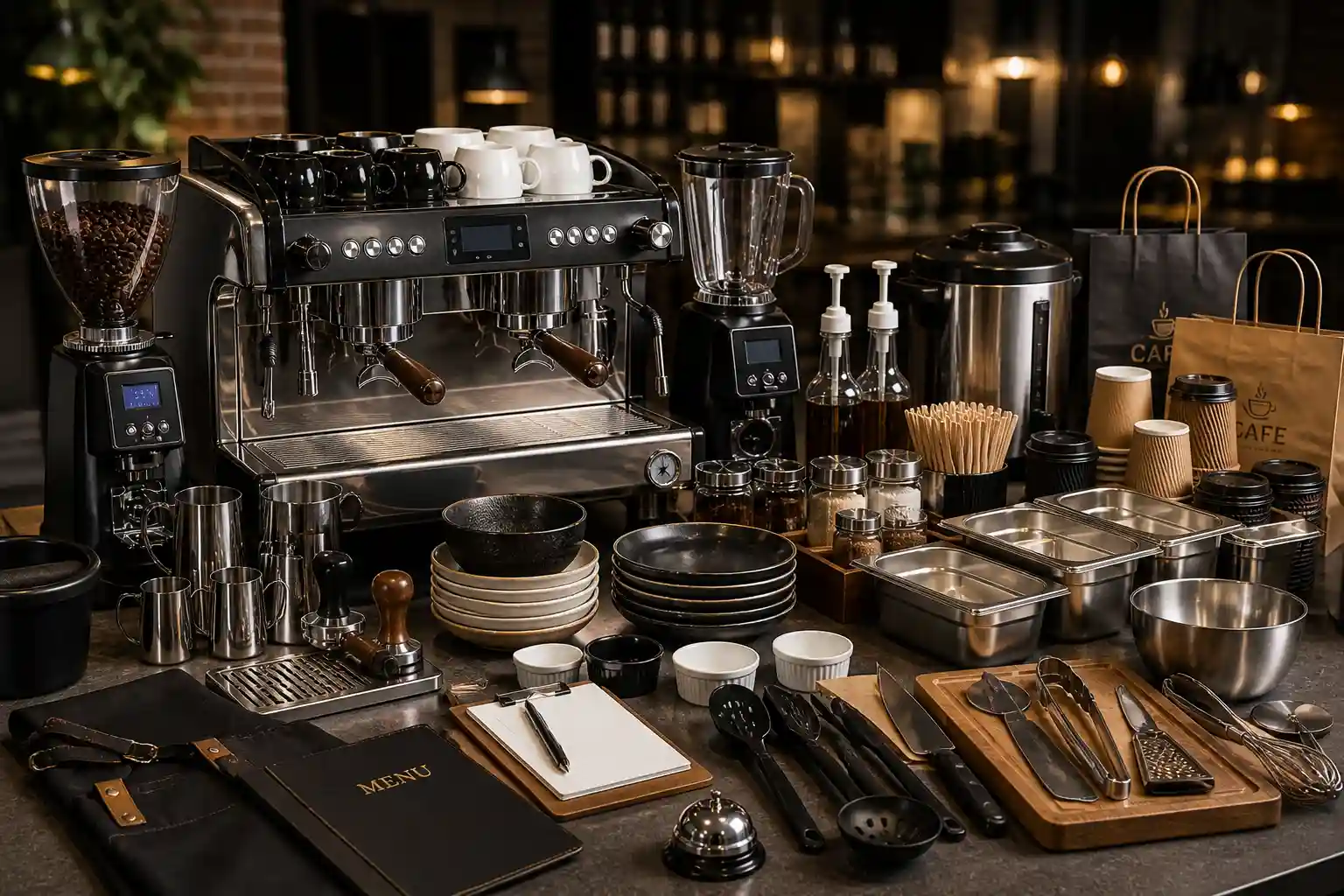
The term "supplies" here is far broader than one might initially think. People often overlook the fact that it encompasses everything from professional coffee machines to small serving spoons, from spices and raw materials to cleaning and sanitizing equipment. Any item used in the kitchen, service area, or behind the bar is part of this system.
The truth is that the requirements for cafes differ somewhat from those of full-service restaurants, but they share one fundamental need: high-quality ingredients and reliable equipment. A restaurant serving hot meals needs professional ovens, heavy-duty cooking pots, and adequate refrigeration systems, while a cafe primarily needs coffee-making equipment and displays for baked goods and cold drinks. Some of these requirements are shared, while others are specialized.
What is striking here is that non-food supplies for cafes and restaurants — such as cleaning supplies, sanitizing materials, and safety equipment — are often overlooked in feasibility studies, even though they may consume an unexpected portion of the budget if not accounted for in advance.
The importance of equipping cafes and restaurants with appropriate equipment
Equipping a cafe isn't just about buying equipment—it's about making a strategic decision that impacts every day of the week. Inadequate equipment slows down service, increases maintenance costs, and puts a strain on the entire team. Conversely, good equipment makes life easier for staff, reduces preparation time, and improves the quality of the final product.
First-class restaurant equipment directly impacts the customer experience, even if they don't see what's happening in the kitchen. Food arrives on time, at the right temperature, and with a professional presentation—all natural results of properly functioning equipment. However, skimping on equipment in the hope of saving on start-up costs is a choice that the business owner will pay for many times over later.
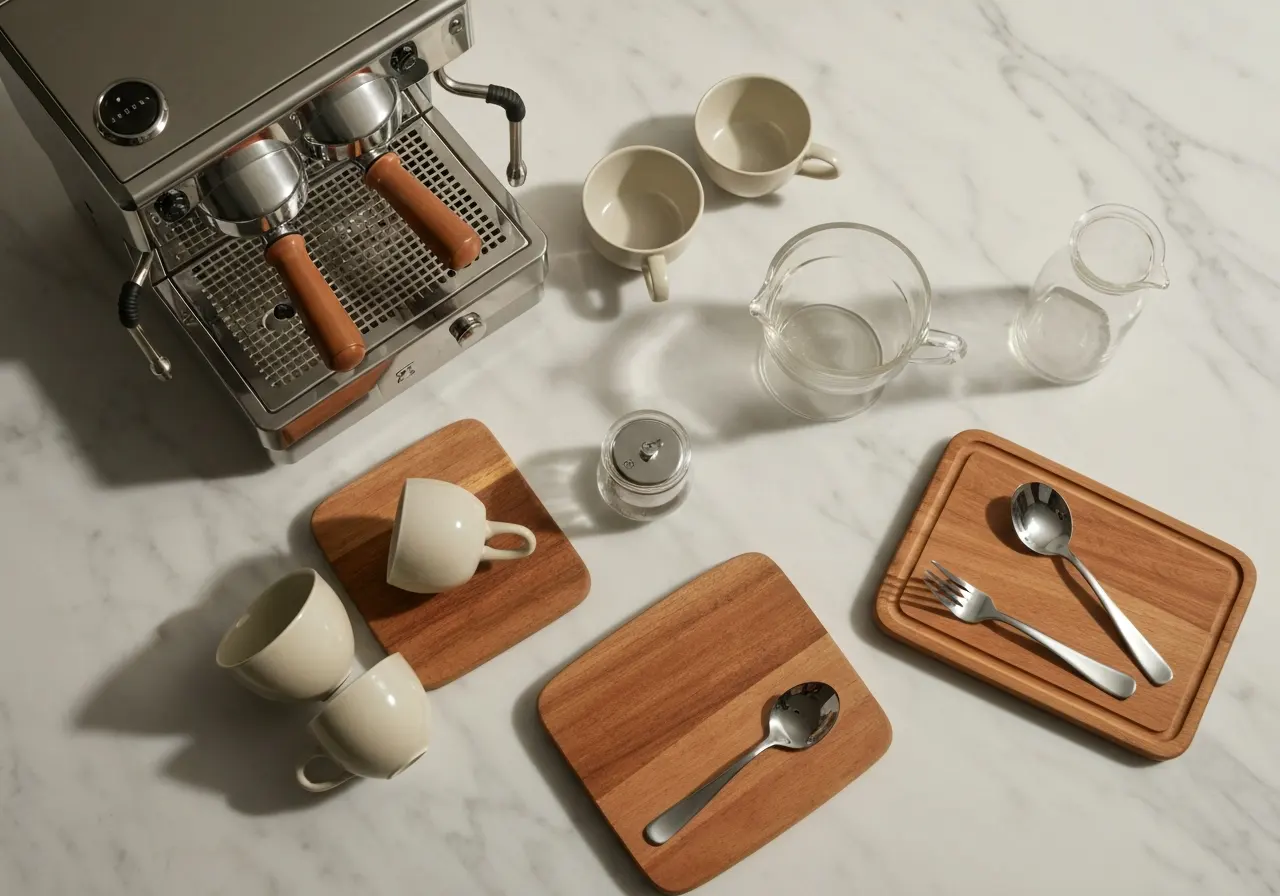
It's not just about large equipment. Even the choice of utensils and serving dishes reinforces the customer's perception of the establishment. A restaurant that serves its food in poor-quality dishes weakens the customer's impression, even if the food is delicious. These small details are what truly make the difference in the competitive world of restaurants.
.webp)
How do cafe and restaurant supplies affect service quality and success?
Have you ever walked into a café and felt your coffee was late even though the place was nearly empty? Most of the time, the problem isn't the staff—it's the equipment. A coffee machine that's not up to par for the order size, or a refrigerator that isn't cooling efficiently, can create an invisible bottleneck that disrupts the entire workflow. This is precisely what the relationship between equipment and service quality means.
A well-equipped café improves table turnover, reduces material waste, and enhances the team's responsiveness during peak hours. A café that handles the pressures of lunchtime or evening rush smoothly isn't just lucky; it's well-equipped. Sometimes, the difference between the two is as simple as choosing the right supplier.
Qimmat Al-Markat Al-Arabiya Company, with its expertise in importing and distributing food products, observes that projects that succeed in the long run are those that invest in properly equipping cafes and restaurants from the outset, not those that postpone this decision until profits are generated. Profits come faster when the equipment is properly prepared from day one.
How to choose the best supplier for cafe and restaurant supplies?
- Industry Experience: Look for a supplier with a proven track record in restaurant equipment, not a generic supplier who sells everything without specialization. Experience means they know what your business needs before you even ask.
- Product Variety and Comprehensiveness: A good supplier provides all your cafe and restaurant needs under one roof—from raw food supplies to operating equipment to hygiene products. Dealing with one reliable supplier saves you time and effort.
- Supply Continuity: Supply disruptions are disastrous in this sector. Verify the supplier's ability to meet delivery deadlines and quantities, even during peak seasons.
- Quality and Specifications: Request samples or trials before committing to large quantities. A supplier confident in their products will not hesitate to do so.
- After-Sales Support: Whether it's guidance on usage, flexibility in exchanges, or swift problem resolution—this is what distinguishes a genuine supplier from an average vendor.
- Reputation and Credibility: Companies that have been importing and distributing food products for a long time, like Qimmat Al Arabiya, have tested their market and built a reputation you can rely on.
The right supplier isn't the cheapest—it's the most reliable.
.webp)
Important tips for the success of a restaurant or cafe project
- Start with a realistic feasibility study: Don't base your budget on optimism, but on concrete figures that include every single item needed for equipment.
- Define your project type precisely before purchasing: Equipping a café is different from equipping a family restaurant or a fast-food establishment. Each type has different requirements.
- Don't neglect storage and refrigeration: A good storage area reduces waste and preserves food quality, and it's a direct investment in your profit margin.
- Develop a regular maintenance plan: Equipment requires consistent upkeep, and neglecting it can lead to unexpected breakdowns at the worst possible time.
- Consult with experienced professionals: Successful restaurant owners are an invaluable source of information—ask them about their purchases and regrets, and about what they didn't buy and regret not buying.
- Invest in training: A good tool in the hands of an untrained employee only performs half as well. Equipment and training are two sides of the same coin.
- Review your equipment after the first three months: Actual use will reveal what you truly need and what you purchased unnecessarily.
Common mistakes when setting up cafes and restaurants
- Overspending on non-essential equipment: Purchasing high-spec appliances that aren't needed for the actual project size drains the budget and complicates operations without any real return.
- Neglecting kitchen needs in favor of aesthetics: External beauty attracts a customer once, but food quality and speed of service—which are linked to kitchen equipment—are what make them come back.
- Relying on unreliable suppliers due to low prices: A low price today could mean a supply shortage tomorrow or products that don't meet specifications.
- Ignoring health and safety licensing requirements: Some equipment requires operating licenses. Overlooking this could prevent the project from opening altogether.
- Buying large quantities of perishable food: Overbuying early without proper storage systems leads to immediate losses from the first week.
- Failure to plan for expansion: Building a business on a small plot of land without considering future capacity increases will soon find themselves facing a complete and costly renovation.
Cafes are essentially about preparing coffee and cold drinks and displaying pastries, and they require a relatively quick and simple service environment. Restaurants, on the other hand, require more sophisticated kitchens with diverse cooking equipment, larger refrigeration systems, and multiple production lines. Despite this, both categories share many basic requirements, such as serving utensils, hygiene products, and raw food supplies.
The most accurate approach is to divide the budget into three categories: kitchen equipment and large appliances, food and consumables, and serving and daily operating supplies. After identifying each category, add a reserve of at least fifteen percent for unexpected expenses—this isn't a luxury, but a necessity proven by the reality of almost every project.
Yes, this is indeed the best option when the supplier is specialized and comprehensive. Dealing with a single, reliable supplier saves you the effort of coordinating with multiple parties and simplifies order tracking and problem-solving. Companies like Qimmat Al-Markat Al-Arabia, which imports and distributes food products, offer this type of integrated solution, making reliance on a single supplier a practical choice, not just a convenience.
