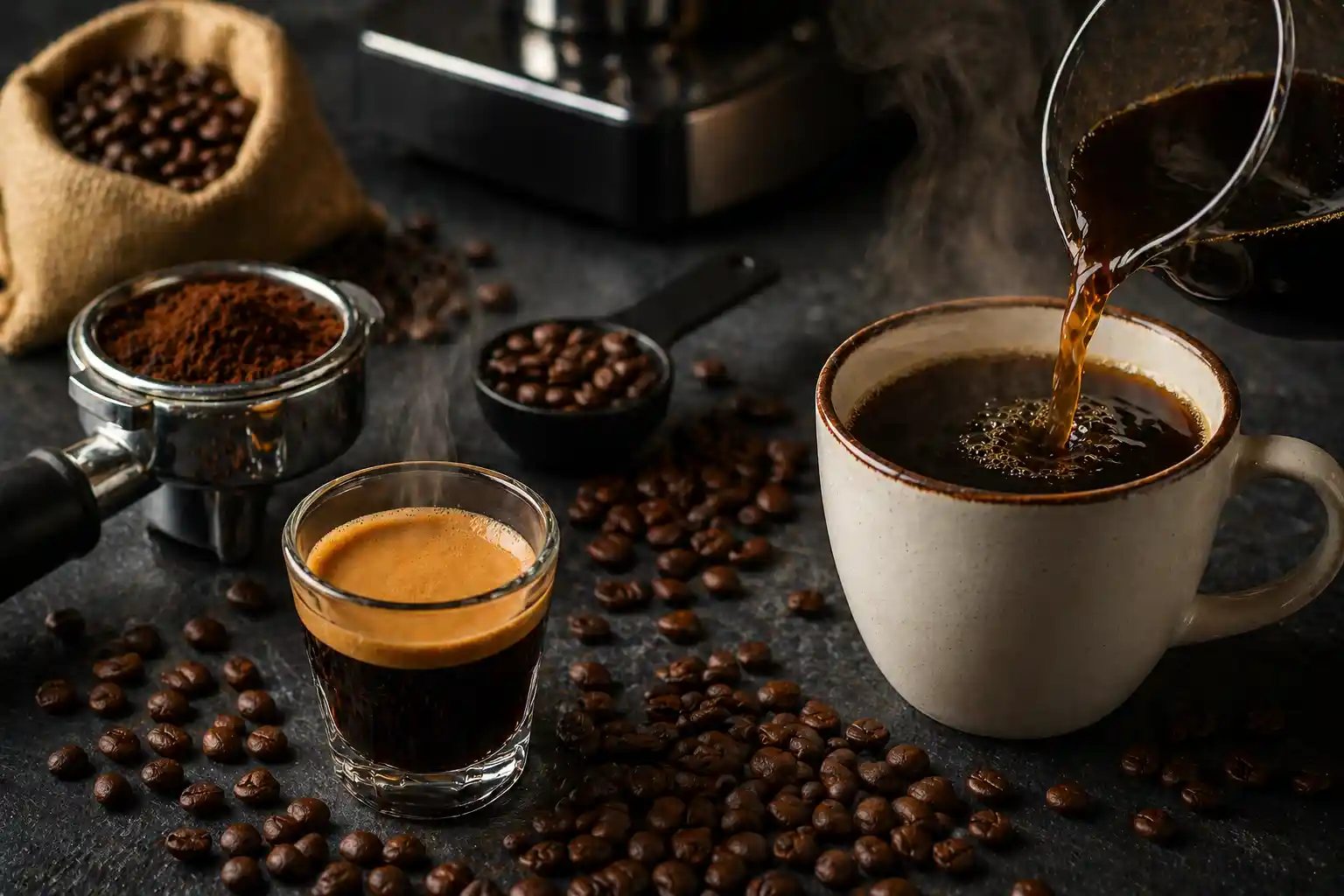
Ask ten coffee drinkers about the difference between espresso and coffee and you'll likely get ten different answers — some confident, some vague, and a few that are just plain wrong. Understanding this difference matters more than most people realize, because it shapes everything from how you order at a café to how you stock your kitchen. The difference between espresso and coffee goes well beyond the size of the cup.
At Arab Brands Summit Company, a business dedicated to importing and distributing luxury food products, coffee knowledge is taken seriously. The company works with premium-grade ingredients and beverages, which means questions like these come up constantly among suppliers, retailers, and everyday enthusiasts alike. Getting the facts straight is the first step toward truly appreciating what's in your cup.
The Difference Between Coffee and Espresso
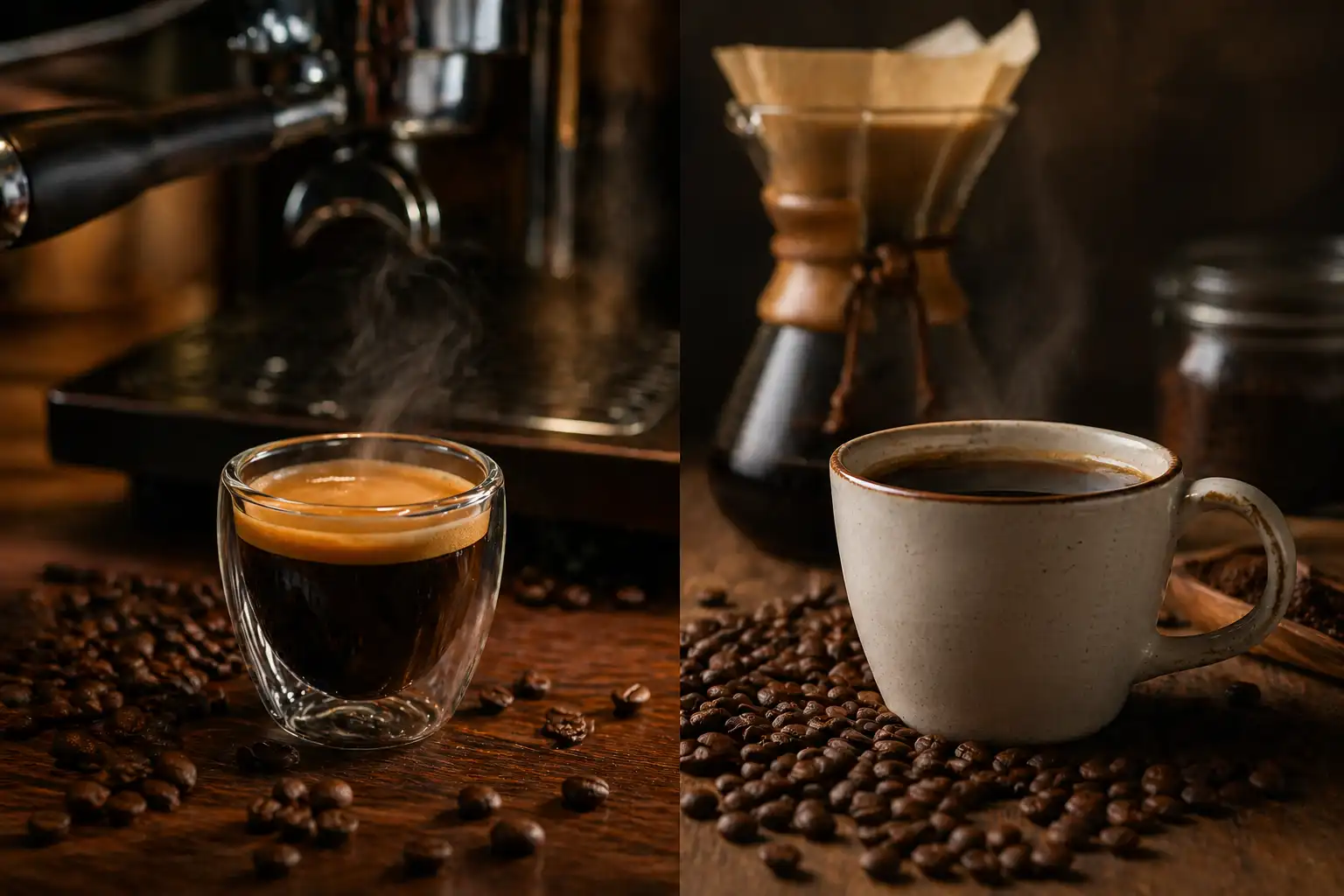
At the most fundamental level, both coffee and espresso come from the same source: roasted coffee beans. What sets them apart is not the bean itself — though bean selection does play a role — but rather the brewing method, grind size, pressure, and water ratio used to extract the final drink. Regular brewed coffee is made by allowing hot water to slowly pass through medium-ground coffee, producing a larger, lighter-bodied beverage. Espresso, by contrast, forces hot water under high pressure — typically around 9 bars — through very finely ground, tightly packed coffee in a matter of 25 to 30 seconds.
The result is something distinctly different in texture, concentration, and flavor profile. Espresso produces a small, dense shot — usually 30 to 60 milliliters — with a thick, syrupy consistency and a layer of golden-brown crema on top. That crema is actually one of the clearest visual markers that separates a proper espresso from any other brewing style. Regular coffee, whether drip, pour-over, or French press, produces a thinner liquid with a more diluted flavor. Neither is better than the other — they simply serve different purposes and satisfy different cravings.
What's interesting here is that many people assume espresso is a specific type of bean, like a variety grown in a particular region. It isn't. The word "espresso" describes a brewing process, not a plant species or a roast level. You could technically brew espresso from a light-roast Ethiopian bean or a dark Italian blend — the machine and method define it, not the origin. This is one of the most commonly misunderstood points when people explore the difference between coffee types.
Caffeine in Coffee vs. Espresso
Here's the thing — most people assume espresso has dramatically more caffeine than regular coffee, and while it is more concentrated per milliliter, the total caffeine picture is more nuanced. A single shot of espresso contains roughly 63 milligrams of caffeine. A standard 240-milliliter cup of drip coffee contains somewhere between 95 and 150 milligrams, depending on the bean, roast, and brew time. So when you drink a full cup of coffee, you're often consuming more total caffeine than a single espresso shot delivers.
The confusion comes from concentration versus volume. Espresso has far more caffeine per ounce than brewed coffee — which is why it feels like a more intense hit. But the human body responds to total caffeine intake, not caffeine density. If you drink two or three espresso shots — which is common in drinks like a double shot or a lungo — the caffeine adds up quickly and can absolutely exceed a regular cup of coffee. Understanding this distinction is particularly relevant for people who are sensitive to caffeine or monitoring their intake for health reasons.
Roast level also plays a surprisingly counterintuitive role. Lighter roasts actually retain slightly more caffeine than darker roasts, since prolonged heat breaks down caffeine molecules over time. So the best espresso coffee made from a dark roast might deliver marginally less caffeine per gram than a lighter specialty brew — a detail that surprises most people when they first hear it.
Factors That Affect Your Coffee Drink
- Grind size: Finer grinds extract faster and are essential for espresso; coarser grinds suit slower brewing methods like French press or cold brew.
- Water temperature: The ideal range is 90–96°C — too hot and the coffee turns bitter, too cool and it tastes sour and underdeveloped.
- Brew time: Espresso extracts in under 30 seconds; drip coffee takes 4–6 minutes; cold brew can steep for 12–24 hours.
- Coffee-to-water ratio: Espresso uses roughly 1:2 (coffee to water by weight); filter coffee typically uses a 1:15 or 1:17 ratio.
- Pressure: Only espresso machines apply pressure during brewing — this is what creates crema and that dense, layered flavor.
- Bean freshness: Stale beans produce flat, lifeless coffee regardless of method; freshly roasted and properly stored beans make a measurable difference.
- Water quality: Hard water dulls flavor; filtered or softened water allows the full complexity of espresso coffee beans to come through.
- Tamping consistency: For espresso specifically, uneven tamping leads to channeling — water takes the path of least resistance and produces an uneven extraction.
The Difference Between Specialty Coffee and Espresso
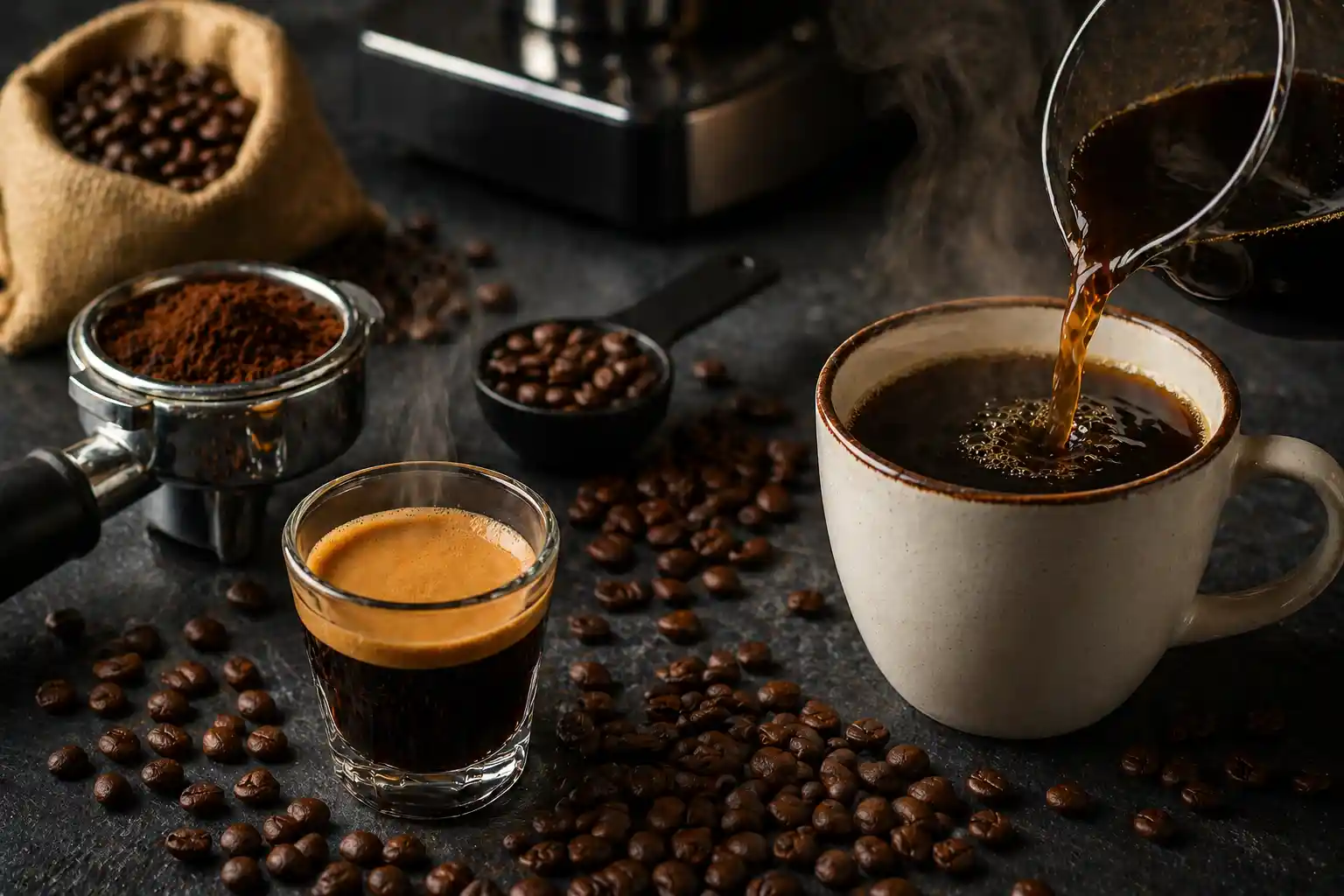
Specialty coffee is a term with a specific meaning in the industry — it refers to beans that have scored 80 points or above on the Specialty Coffee Association's 100-point scale. These are beans grown in carefully managed microclimates, harvested with precision, and processed with attention to detail at every stage. Espresso, as we've established, is a brewing method. So the question of how specialty coffee differs from espresso is really a question of raw ingredient quality versus preparation technique — and both matter enormously.
When you brew specialty coffee using an espresso machine, you get what many consider the highest expression of the bean. The pressure and concentration of espresso extraction pull out flavors that slower methods sometimes leave behind — bright acidity, layered sweetness, and aromatic complexity that can genuinely surprise you. However, some specialty beans — particularly light-roasted, fruit-forward varieties — actually perform better as pour-over or filter coffee, where their delicate floral notes can breathe without being overwhelmed by pressure extraction. This is a genuine ongoing debate among serious coffee professionals, and there's no universal answer.
What is espresso when made with specialty-grade beans? It becomes something closer to a culinary experience than a morning routine. Arab Brands Summit Company, through its work in importing and distributing luxury food products, recognizes this intersection between quality sourcing and preparation craft. The beans you start with — their origin, processing method, and roast profile — set the ceiling for what any brew method can achieve. No machine, however sophisticated, can extract quality that wasn't there to begin with.
The Difference Between Coffee and Espresso in Calories
- Black drip coffee (240 ml): Approximately 2 calories — essentially negligible, coming from trace proteins and oils.
- Single espresso shot (30 ml): Around 3 calories — similarly minimal in its pure form.
- Espresso macchiato: 10–15 calories, depending on the amount of milk foam added.
- Cappuccino (standard): 60–120 calories, largely from whole milk steamed into the drink.
- Flat white: 100–130 calories for a standard preparation with full-fat milk.
- Soda coffee (cold espresso over sparkling water or soda): Varies widely — plain versions stay under 10 calories, but sweetened commercial versions can reach 150+ calories.
- Flavored lattes: Can easily exceed 250–400 calories once syrups, whipped cream, and sweetened milk are included.
- Iced coffee with cream and sugar: Often 150–200 calories, depending on portion size and additions.
Drinks Based on Espresso
Espresso is the foundation of the modern café menu in a way that regular brewed coffee simply isn't. Almost every milk-based coffee drink you can order — the cappuccino, the latte, the flat white, the cortado, the macchiato — starts with one or more shots of espresso. This is worth appreciating, because it means the quality of those drinks is almost entirely dependent on the quality of the espresso at their core. A poorly pulled shot doesn't improve when you add steamed milk to it.
The americano is perhaps the most direct bridge between espresso and regular coffee. It's made by adding hot water to an espresso shot — diluting the concentration to approximate the volume and strength of a brewed cup, while retaining the espresso's distinct extraction character. Many people who find straight espresso too intense actually enjoy an americano as their daily drink. Then there's the expresso variation known as the lungo, where more water is pushed through the same puck, producing a longer, slightly more bitter shot — not to everyone's taste, but a legitimate style with its own following.
Soda coffee — espresso served over ice with sparkling water or soda — has exploded in popularity over the past few years, particularly in Southeast Asia and increasingly across the Middle East. The contrast between the dense, bitter espresso and the effervescent base creates something genuinely refreshing that neither component achieves on its own. It's a good example of how espresso, as a base ingredient, continues to inspire new drink categories rather than remaining confined to traditional formats. Arab Brands Summit Company keeps a close eye on emerging beverage trends like these, given their role in importing and distributing luxury food products to markets where premium coffee culture is growing rapidly.
