.webp)
Many people order their coffee daily without truly understanding what's in their cup. The difference between espresso and Americano isn't just about size or color; it's about philosophy, preparation, and the entire experience. Understanding this difference allows you to choose consciously and savor every sip.
At Qimmat Al-Markat Al-Arabiya, a company specializing in importing and distributing food products, we handle the finest coffee beans daily, sourced directly from their origins. This direct interaction with the product has taught us that true quality begins with a deep understanding of what you're drinking.
What is espresso?
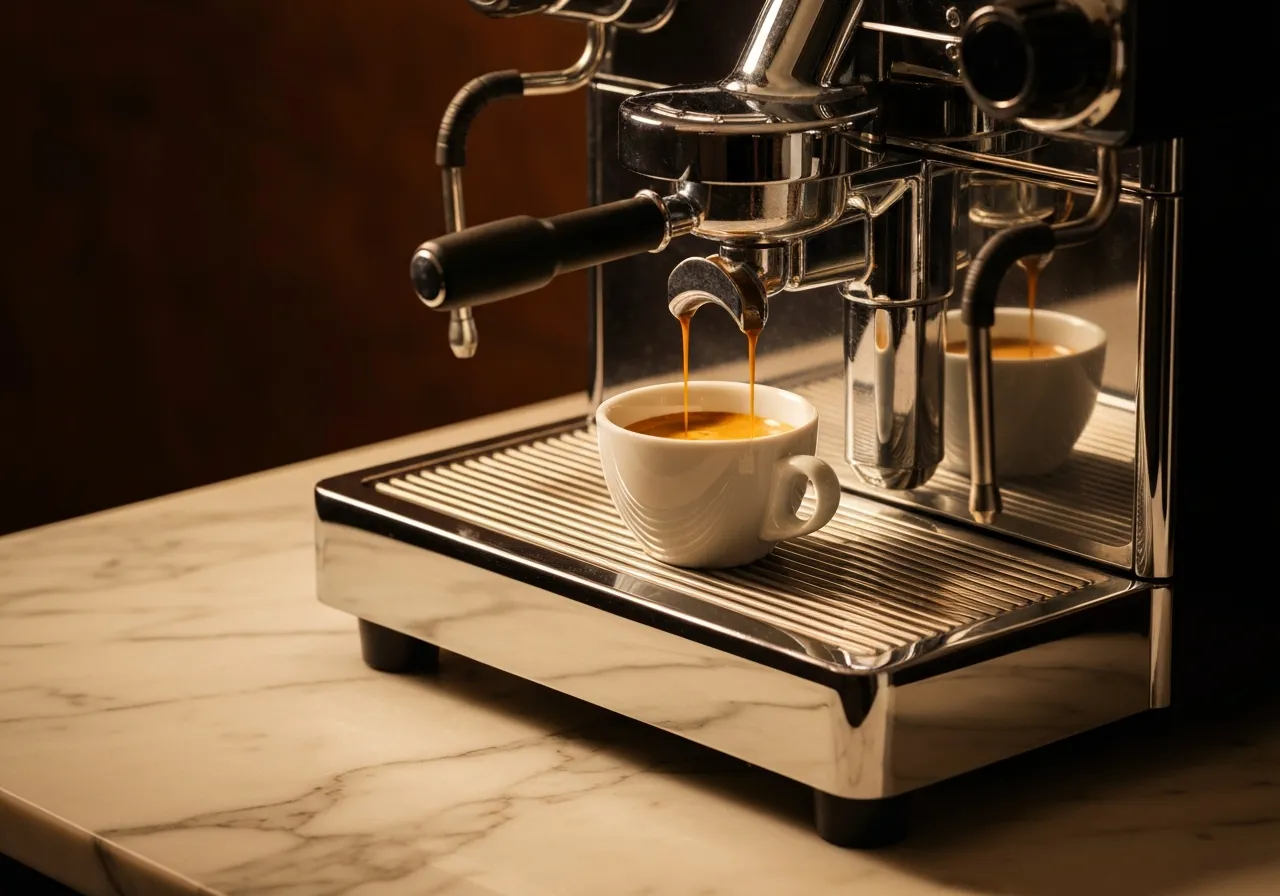
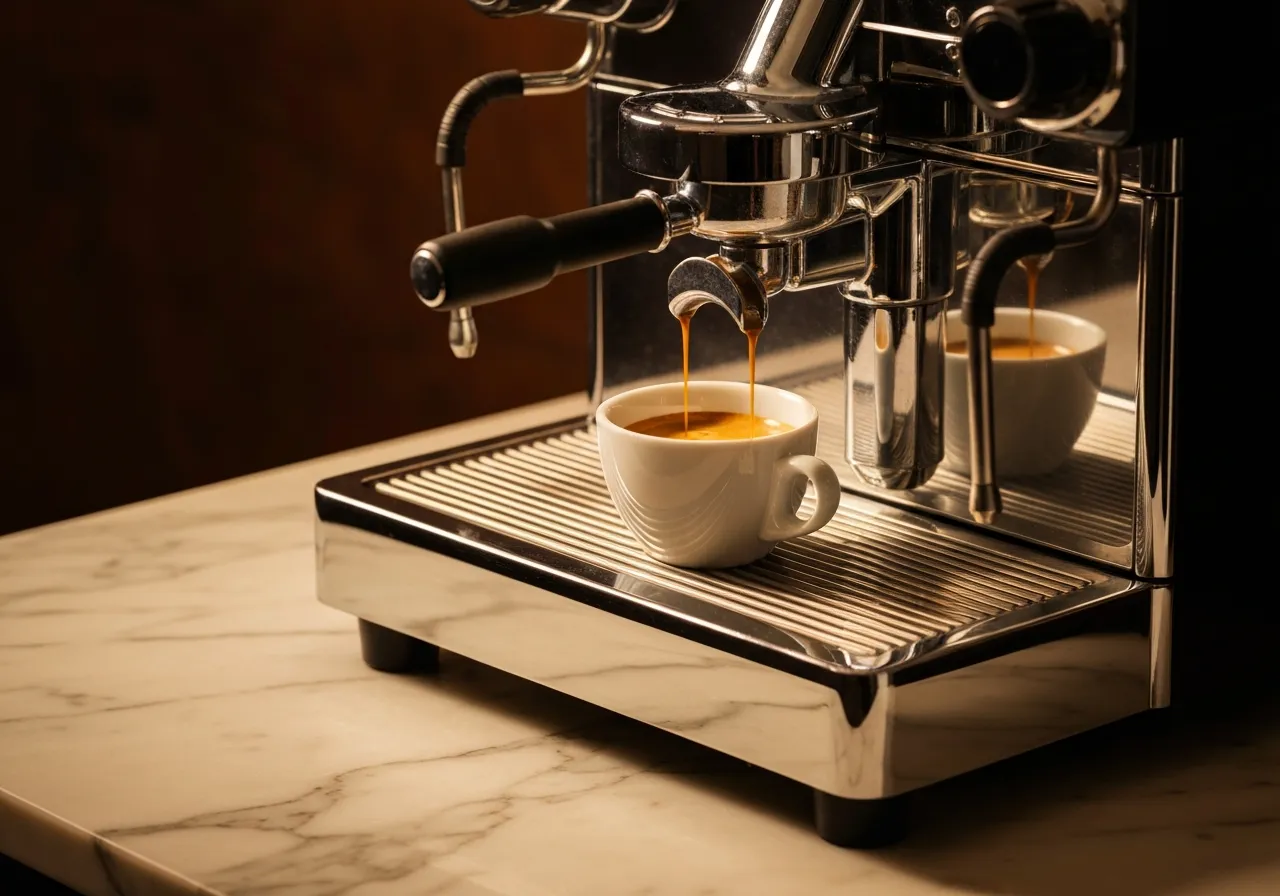
The difference between espresso and Americano begins with a proper understanding of each drink. What is espresso? It's a concentrated shot of coffee extracted by forcing hot water under high pressure, between 9 and 15 bar, through a layer of very finely ground coffee. The result is a small cup, usually no more than 30 milliliters, but packed with rich flavor and aroma that fills the room.
What's striking here is that espresso isn't measured by quantity, but by concentration. Every drop possesses a depth unmatched by any other coffee beverage. The creamy top layer, known as crema, is the hallmark of espresso—tiny oily bubbles formed by pressure that give the coffee its distinctive velvety texture.
The coffee beans used in espresso require careful selection. People often overlook the fact that the type of bean and its roast level directly impact the final quality of the espresso. A dark roast produces a balanced bitterness, while a medium roast brings out subtle acidity and rich, aged fruit notes.
.webp)
What are the distinctive features of espresso's taste and aroma?
- A concentrated, intense flavor that perfectly balances bitterness and sweetness.
- A powerful aroma that fills the senses the moment you take a shot.
- A golden crema on the surface indicates the quality of the extraction.
- A rich, full-bodied texture on the tongue, completely different from filter coffee.
- Complex notes ranging from dark chocolate and caramel to roasted fruits.
- A subtle acidity that is particularly noticeable in light roast espresso.
These qualities combine to make espresso a complete sensory experience in a small cup.
The origin and history of espresso
Espresso was born in Italy at the beginning of the 20th century. The need for quick preparation in busy cafes led inventors to develop machines that use steam and pressure to extract coffee in seconds. The name itself is derived from the Italian word meaning "pressured" or "quick."
Over time, espresso became the foundation of most modern coffee drinks. Cappuccinos, lattes, and macchiatos all begin with one or more shots of espresso. In fact, understanding espresso means understanding most of the menu at any cafe around the world.
What is American coffee?
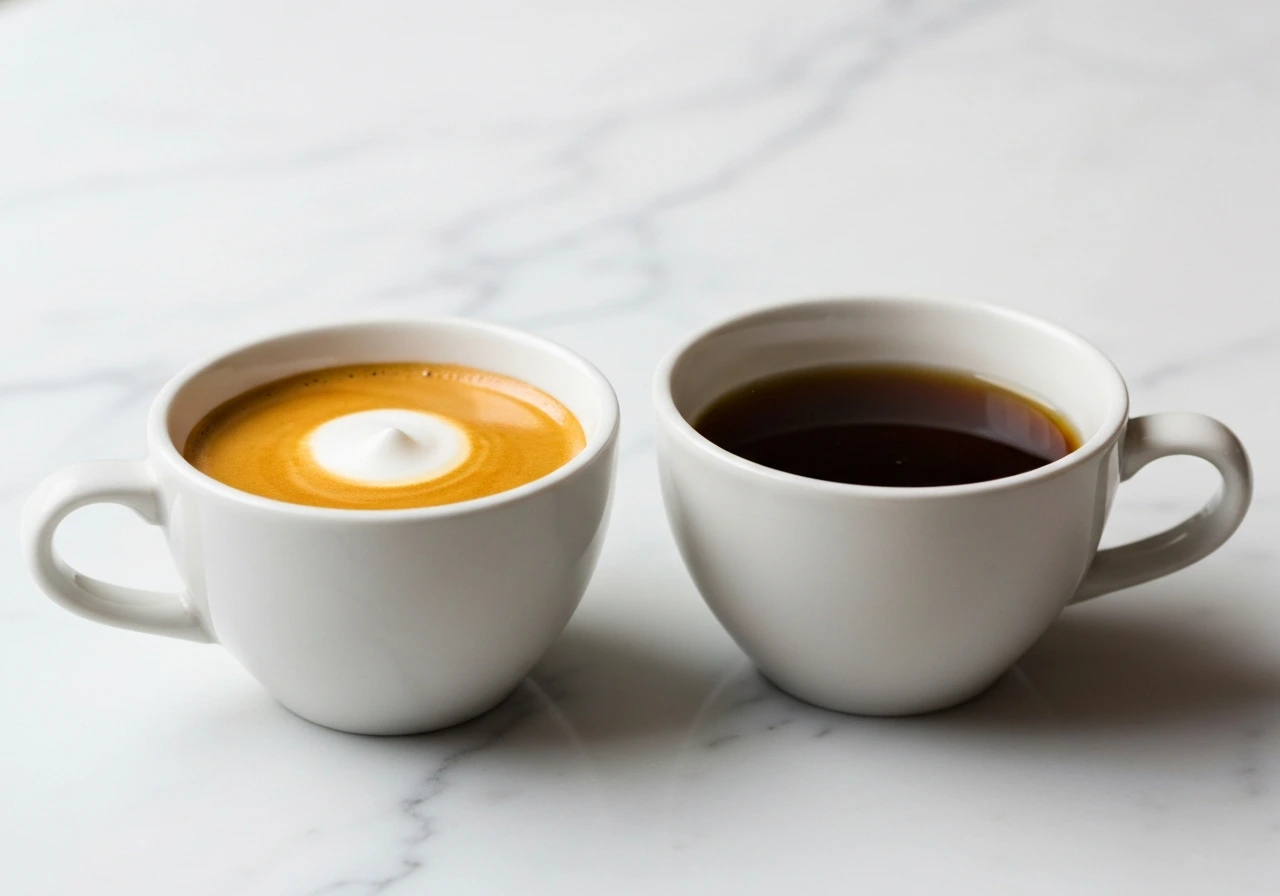
Americano coffee is essentially a diluted espresso. Between 90 and 150 milliliters of hot water are added, resulting in a larger, less concentrated cup. While it may appear to be just an extended espresso, the actual experience in the cup is quite different in both taste and texture.
What makes Americano coffee special is that it allows the reader to sip it more slowly. You can enjoy it without it cooling down as quickly as a smaller espresso. This makes it the perfect choice for those who want coffee companionship during a long workday.
The origin of American coffee and the reason for its name
The story of American coffee dates back to World War II. American soldiers stationed in Italy found espresso too strong for their usual tastes of milder filter coffee, so they requested water be added. Italian café owners responded to this request and named it "caffè Americano" in honor of the American soldiers.
Interestingly, this beverage, which began as a temporary solution to satisfy an unusual taste, has become one of the most popular coffee drinks in the world. Americano is neither filter coffee nor pure espresso; it's something else entirely, with its own distinct identity.
.webp)
What makes American coffee taste so special?
- A milder, less intense flavor compared to espresso.
- A larger size, ideal for those who want to enjoy it for longer.
- The espresso flavor is present but less intense.
- The crema is reduced or disappears after adding water.
- Flexible strength control depending on the amount of water added.
- Generally less bitter and easier for those who don't like strong coffee.
Simplicity here is strength, not weakness.
The difference between espresso and Americano
The difference between espresso and Americano coffee becomes apparent at every stage of the experience. First, in volume: espresso is a small shot, no more than 30 milliliters, while Americano can reach 180 milliliters or more. Second, in concentration: each milliliter of espresso contains a much higher concentration of extracted substances than in Americano. Third, in the sensation on the throat: espresso is heavy and velvety, while Americano is light and smooth.
The truth is, an Americano isn't simply diluted espresso, even though the preparation is. Adding water alters the drink's chemical balance, bringing out flavors that were previously hidden in a strong espresso. This is why some coffee beans offer different flavor profiles when brewed as espresso compared to an Americano made from the same bean.
This difference extends to everyday consumption. Espresso drinkers want a quick, concentrated shot, often enjoyed standing up in an Italian café, as tradition dictates. Americano drinkers want to savor a long, sippy cup, whether at their desk or in their favorite café.
When should you choose espresso and when should you choose Americano?
The answer depends on your situation and what you need at that moment. Do you want a quick energy boost before an important meeting? Espresso is the way to go. Its small size means you'll finish it in a minute or two, and its high concentration will give you what you need quickly. Many people in Europe don't start their day without a single, decisive shot of espresso.
However, if you're sitting down for an hour of studying or quiet work and want a warm companion that will last, then an Americano is the best choice. Its large size and balanced flavor make it comfortable to drink for a longer period without getting caffeine overload. Americano coffee is a smart choice for those who want coffee without the overdoing it.
Experience in selecting coffee beans also plays a significant role. The type of beans and roast level suitable for espresso may not be equally suitable for Americano. At Qimmat Al-Markat Al-Arabiya, we understand this difference well, as importing and distributing food products requires in-depth knowledge of each product's nature and how it is used. If you are also a fan of Turkish coffee, you will find that the differences between these varieties enrich your experience and broaden your palate.
Carefully selected Turkish coffee beans completely change the equation, whether you are preparing espresso or Americano. Quality is reflected in every cup.
In terms of strength, yes, espresso is significantly stronger per milliliter. However, in terms of the total caffeine content per cup, the difference might be less than you expect because Americanos have a larger volume. The feeling of strength comes from the higher concentration in espresso, which hits the senses more quickly, making it seem more potent even though the total caffeine content is sometimes similar.
The difference between espresso and Americano in terms of caffeine content is subtle and interesting. A single shot of espresso contains approximately 60 to 75 milligrams of caffeine, while a cup of Americano, made from two shots, can contain up to 120 to 150 milligrams. This means a larger Americano may contain more caffeine than a single espresso, but the concentration is much lower, resulting in a slower and more gradual release of caffeine.
Turkish coffee differs radically in its preparation method from both Americano and espresso. Turkish coffee is prepared by boiling very finely ground coffee directly with water, while Americano relies on pressure and mechanical extraction. However, both share the use of high-quality Turkish or Arabica coffee beans as a base and a deep appreciation for rich flavor. Choosing the right beans is what makes the difference in each type.
